
Contents

If your eBay ad fees went up without you changing a single campaign setting, you're not imagining it. Since January 2026, eBay has been running one of the biggest changes to Promoted Listings in years, and it caught a lot of sellers off guard. Understanding exactly what changed — and the real difference between General and Priority campaigns — is no longer optional if you want to protect your margins.
The Big Shift: What Changed on January 13, 2026
Starting January 13, 2026, on ebay.com, ebay.ca and cafr.ebay.ca, eBay changed how it decides which of your sales count as "ad sales" for General campaigns [1]. Priority campaigns are not affected by that attribution change. Other eBay sites — the UK, France, Italy, Spain, Australia, and Germany — already used this attribution definition before it reached the US and Canada [1].
The Old Model vs. The New Model
Previously, you were charged an ad fee only when a buyer clicked your ad and then either bought that specific item (Direct attribution) or bought something else from your store (Halo attribution).
The new model is much broader: if any buyer clicks your promoted listing, a 30-day window opens. If any buyer — even someone who never saw or clicked the ad — purchases that same item within those 30 days, you're charged the ad fee, as long as the item was being promoted both when the click happened and when the sale happened [1].
One click can now trigger ad fees on every sale of that item for the next 30 days, even sales that had nothing to do with the original click.
eBay itself says spend on General campaigns may increase, because more of your sales will be attributed to your campaigns. Direct and Halo attribution no longer apply to General campaigns [1].
eBay also made a second change: Priority campaigns now have exclusive access to the top ad slot in search results. General campaigns are no longer eligible to appear in that position at all. If no Priority ad qualifies for a given search, eBay shows an organic (non-promoted) result there instead [1].
Before you adjust a single ad rate, remember that ads amplify the listing you already have. Zetlis builds complete titles, descriptions, and item specifics from your product photos in seconds, so the listing you promote is ready to convert.
Promoted Listings General: The Cost-Per-Sale Model
General remains the most accessible advertising option on eBay. It operates on a cost-per-sale model — you only pay the ad fee when a sale is attributed to your campaign.
How It Works Now
You set an ad rate (a percentage of the total transaction) that you're willing to pay. eBay then boosts your listing's visibility across search, item pages, and browse pages automatically. Because of the 2026 attribution update, that ad rate now applies to a much wider set of sales than before — any sale within 30 days of a click on that listing, while it's actively promoted [1].
Suggested ad rates for General campaigns update daily. You can set a fixed rate, or allow automatic adjustments up to a cap you choose [2].
General campaigns have no budget: you pay only when the item sells after a click on your ad [1].
Pros and Cons
The appeal of General is its low barrier to entry: it's easy to set up, and in theory you only pay for results. The downside since 2026 is that "results" now means something much broader than before. For sellers with multi-quantity listings — where one click can be followed by dozens of separate sales — a single click can trigger ad fees across nearly your entire month of sales for that item. General campaigns have also lost access to the top search position entirely.
Promoted Listings Priority: The Cost-Per-Click Model
Priority operates on a cost-per-click (CPC) model. You pay whenever a buyer clicks your ad, whether or not they actually buy.

How It Works Now
With Priority, you bid on specific keywords to reach motivated buyers, and eBay runs a second-price auction — the highest bidder wins the placement but only pays the equivalent of the next-highest bid, not their full maximum bid. The attribution model for Priority hasn't changed: you only pay for actual clicks, regardless of what happens after.
It's worth being precise about what "exclusive access" actually means here: promoting a listing with Priority does not guarantee it will appear in the top slot. eBay still factors in your bid, keyword relevance, price, and listing quality when deciding which Priority ads to show and where [1]. What changed is that only Priority ads are eligible for that top position — General campaigns are locked out of it regardless of how well-optimized they are.
Priority campaigns use a target daily budget. In the US, your weekly spend won't exceed 7 times your target daily budget; in some countries, such as Australia and Germany, spend is controlled monthly instead [3].
One more practical detail: Priority campaigns are only available for fixed-price listings. Auctions, including auctions with Buy It Now, aren't eligible [3][4]. If you run auction-style listings, General is your only promoted option for those.
Pros and Cons
The main advantage of Priority is predictability and control — you decide your keywords and your bid, and you only pay when someone actually clicks. For sellers whose General campaign costs have spiked under the new attribution model, shifting high-margin or multi-quantity items to Priority can sometimes produce a lower true cost per sale, since you're not exposed to the 30-day attribution window. The downside is that you pay for clicks even when they don't convert, which means Priority requires more active monitoring than a "set it and forget it" General campaign.
General vs. Priority: A Quick Comparison
| Feature | Promoted Listings General | Promoted Listings Priority |
|---|---|---|
| Payment Model | Cost-per-sale (% of transaction) | Cost-per-click (bid-based) |
| Attribution Model | Expanded 30-day window (any buyer) [1] | Pay per click only — unchanged |
| Top Ad Slot Access | Not eligible, as of Jan. 13, 2026 [1] | Exclusive eligibility (not guaranteed) [1] |
| Listing Format | Auctions and fixed-price | Fixed-price only (no auctions) [3] |
| Keyword Control | eBay controls placement | Seller bids on specific keywords |
| Budget | No budget; you pay only when the item sells after a click | Target daily budget (US: weekly spend capped at 7× the daily target) [3] |
Which Strategy Is Right for You in 2027?
The right choice depends heavily on your inventory type and margins.
If you sell unique, single-quantity items, General may still work reasonably well — a single click is less likely to cascade into multiple attributed sales the way it does with multi-quantity inventory. Even so, it's worth tracking your true ad cost rather than assuming the old math still applies.
If you sell multi-quantity items with steady sales velocity, the new General attribution model can meaningfully cut into your margins, since one early click can end up tagged to many later sales. In this case, moving your highest-margin SKUs to Priority — where you control the bid and only pay for actual clicks — can be the more predictable option [1].
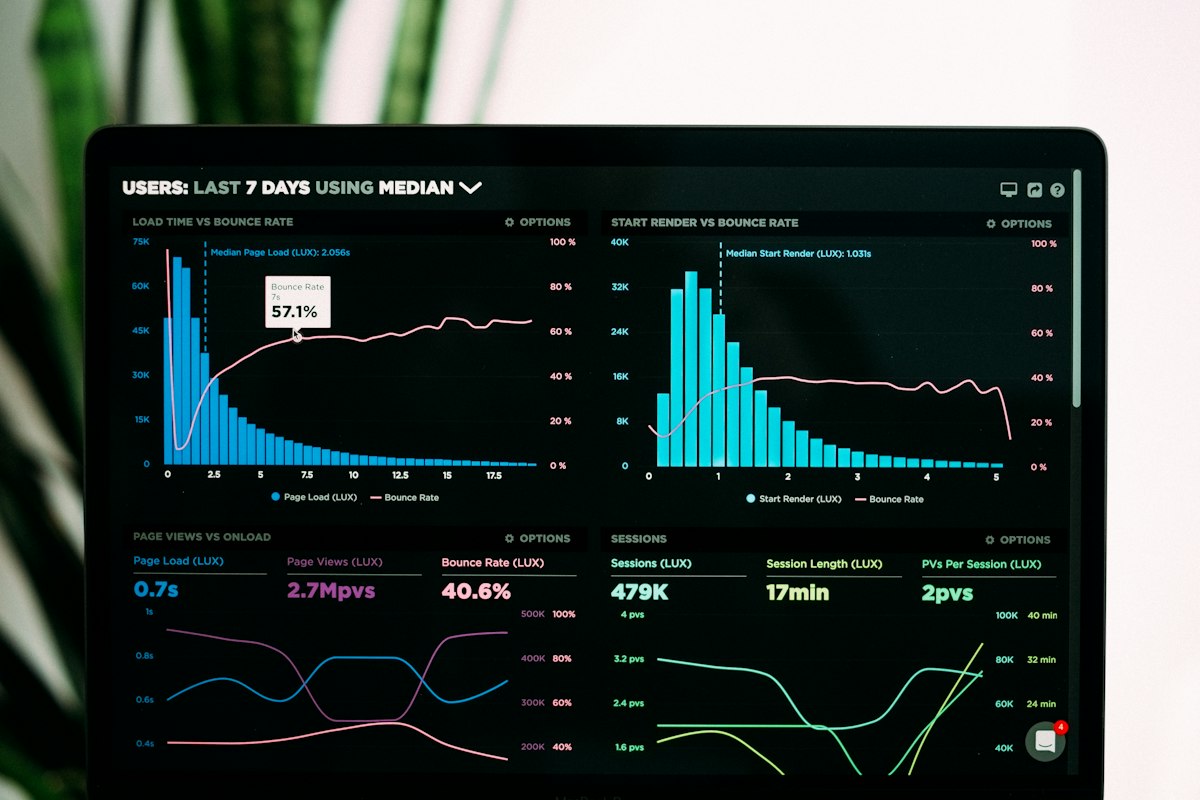
Either way, the math has changed enough in 2026 that "set it and forget it" advertising is a riskier habit than it used to be. Pulling your attribution rate from the Advertising tab in Seller Hub and running the actual numbers is worth ten minutes of your time before assuming your current setup is still profitable.
Promoted Stores Custom
If you have an eBay Store, there's one more option to know about. Promoted Stores Custom is available to eligible Store subscribers and lets you run campaigns of 5 to 1,000 listings, with up to 10 featured items [2].
How Zetlis Fits Into This
Advertising decisions matter more once your listings are actually built to convert. Zetlis focuses on the step before any of this — generating strong, accurate titles, descriptions, and item specifics from your product photos, so your listings are positioned to perform well organically before you ever spend a dollar on promotion. A well-built listing converts better whether you're running General, Priority, or no ads at all, which means every dollar you do spend on advertising goes further. Your first 10 listings are free, no card required.
Final Thoughts
The 2026 changes to eBay Promoted Listings reward sellers who actually run the numbers instead of accepting eBay's suggested settings by default. Know which attribution model applies to your campaign, understand that Priority placement is competitive rather than guaranteed, and match your campaign type to your inventory — auction or fixed-price, single item or multi-quantity. Get those fundamentals right, and Promoted Listings can still be a profitable part of your eBay strategy in 2027. For the other changes sellers should know about, see our guide to eBay changes in 2027.
Sources
[1] eBay: Seller Announcement — Updates to eBay's Promoted Listings
[2] Value Added Resource: eBay Winter 2026 Seller Check-In
[3] eBay Help: Priority campaign strategy
[4] eBay Help: Promoted Listings (Priority, formerly Advanced)
Was this article helpful?
Create & Publish Your First 10 eBay Listings FREE with Zetlis!
No credit card required. Just take photos, review your listings, and publish to eBay.
Start Listing Free →